
Pro-liner DN2200 UV-CIPP liner and UV Curing system
Wall thickness:15mm
Length:32.90m
Application:Rainwater and sewage pipe
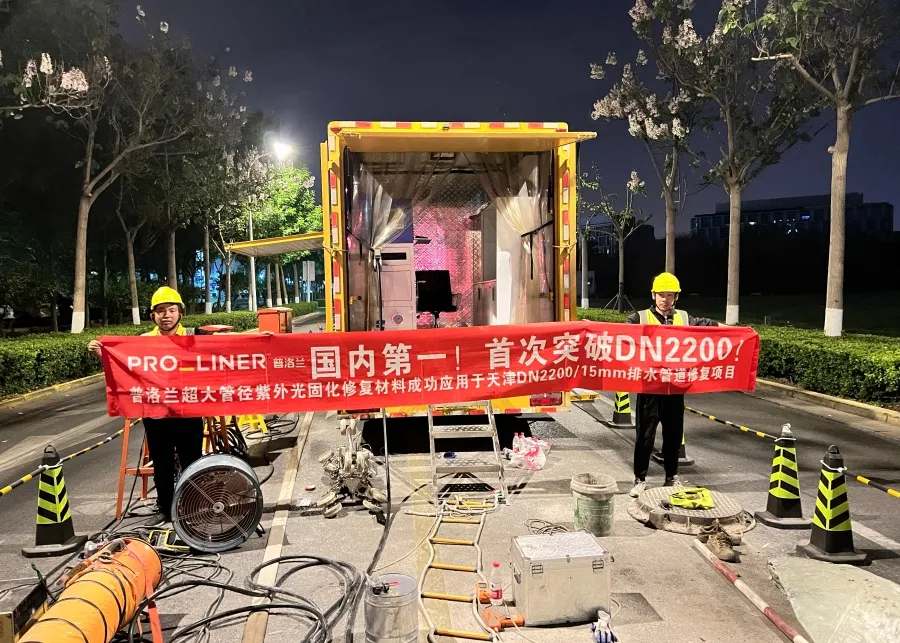
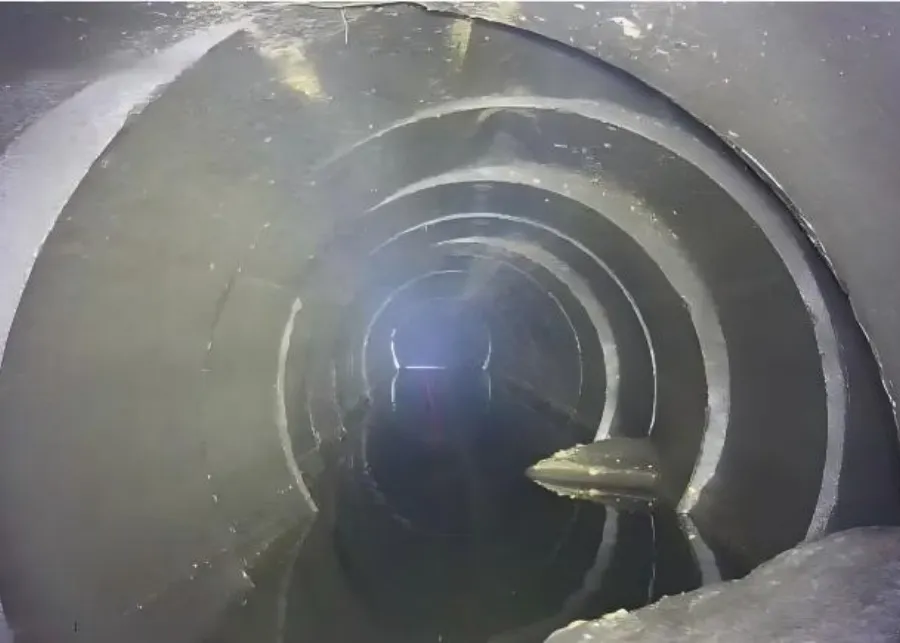
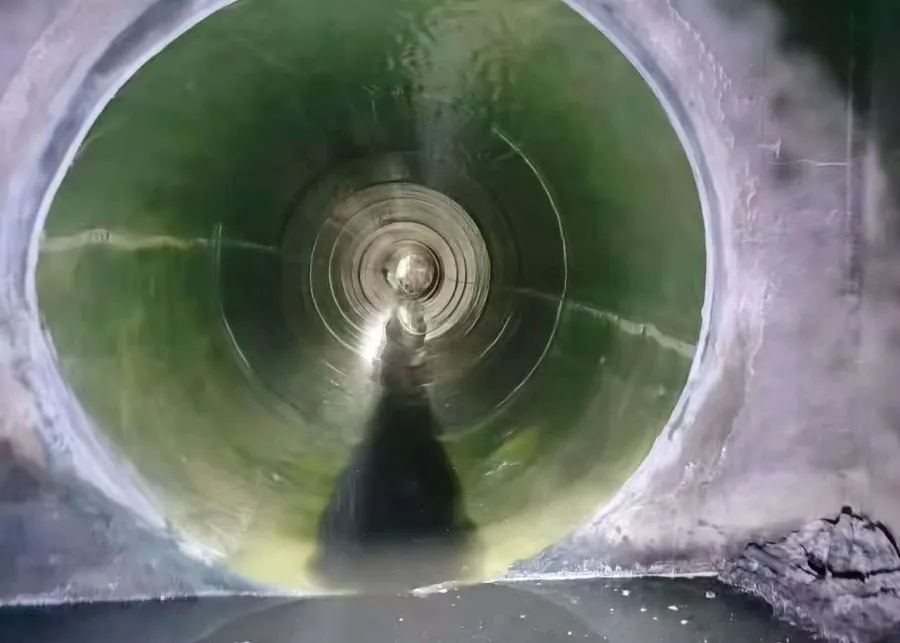
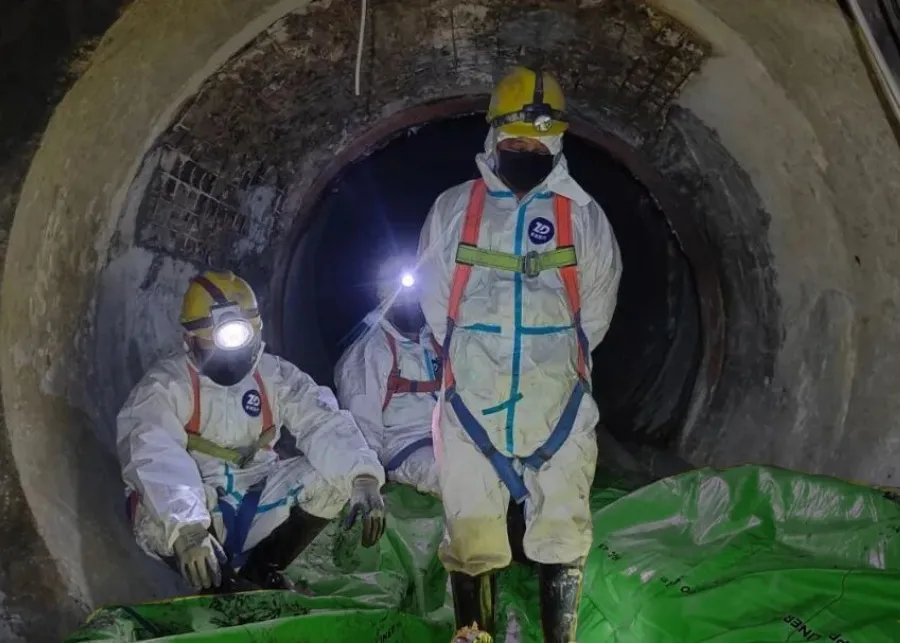
Project Introduction:Through ground-penetrating radar detection, there was a road void. Meanwhile, subsidence and deformation were visible on the road surface. Based on the road detection results, it was initially judged that there may be a 2m*2m*3m cavity under the pavement structure layer. Below the void was a rainwater pipe with a buried depth of 6.05m and a diameter of 2200mm. After reviewing the existing CCTV video data and rehabilitation design drawings, it was found that there was a 3-level misalignment at 1.42 meters west of the well. After rigorous inspection and discussion, the UV curing technology for trenchless rehabilitation was adopted. After the rehabilitation was completed, the loss of the pipe's flow capacity was smaller, and the safety risk was lower compared with the excavation.
Construction Challenge:
1. The world's first application of extra-large diameter liners
Pro-liner DN2200 UV-CIPP liner was specially designed for rehabilitation extra-large diameter pipes, with a liner thickness of 15mm and a corrosion-resistant service life of more than 50 years. Its flexibility was suitable for variable diameter pipes, successfully solving the problems of liner deformation and adhesion for DN2200 diameter pipes, and filling the gap in domestic rehabilitation liners for pipes with diameters above DN2000.
2. UV-CIPP liners with waterproof outer film
The pipe was buried at a depth of 6 meters, and there was severe water seepage in the well chamber and pipe wall, making it difficult to stop water. UV-CIPP liners with waterproof outer film was selected to ensure the successful implementation of this rehabilitation.
3. Great challenges for UV Curing system
Pro-liner UV Curing system were equipped with ultraviolet lamps and intelligent temperature control systems, the power systems supported continuous high-intensity operations, single long-distance rehabilitation, and were suitable for pipe diameters ranging from DN200 to DN2400.
Wall thickness:15mm
Length:32.90m
Application:Rainwater and sewage pipe
Project Introduction:Through ground-penetrating radar detection, there was a road void. Meanwhile, subsidence and deformation were visible on the road surface. Based on the road detection results, it was initially judged that there may be a 2m*2m*3m cavity under the pavement structure layer. Below the void was a rainwater pipe with a buried depth of 6.05m and a diameter of 2200mm. After reviewing the existing CCTV video data and rehabilitation design drawings, it was found that there was a 3-level misalignment at 1.42 meters west of the well. After rigorous inspection and discussion, the UV curing technology for trenchless rehabilitation was adopted. After the rehabilitation was completed, the loss of the pipe's flow capacity was smaller, and the safety risk was lower compared with the excavation.
Construction Challenge:
1. The world's first application of extra-large diameter liners
Pro-liner DN2200 UV-CIPP liner was specially designed for rehabilitation extra-large diameter pipes, with a liner thickness of 15mm and a corrosion-resistant service life of more than 50 years. Its flexibility was suitable for variable diameter pipes, successfully solving the problems of liner deformation and adhesion for DN2200 diameter pipes, and filling the gap in domestic rehabilitation liners for pipes with diameters above DN2000.
2. UV-CIPP liners with waterproof outer film
The pipe was buried at a depth of 6 meters, and there was severe water seepage in the well chamber and pipe wall, making it difficult to stop water. UV-CIPP liners with waterproof outer film was selected to ensure the successful implementation of this rehabilitation.
3. Great challenges for UV Curing system
Pro-liner UV Curing system were equipped with ultraviolet lamps and intelligent temperature control systems, the power systems supported continuous high-intensity operations, single long-distance rehabilitation, and were suitable for pipe diameters ranging from DN200 to DN2400.
 |
 |
 |
 |
|
|
|
|
Get Solution




Copyright © 2026 Anhui Pro-liner Pipeline Repair Technology Co., Ltd.